 Join Here
Skip to content
Join Here
Skip to content 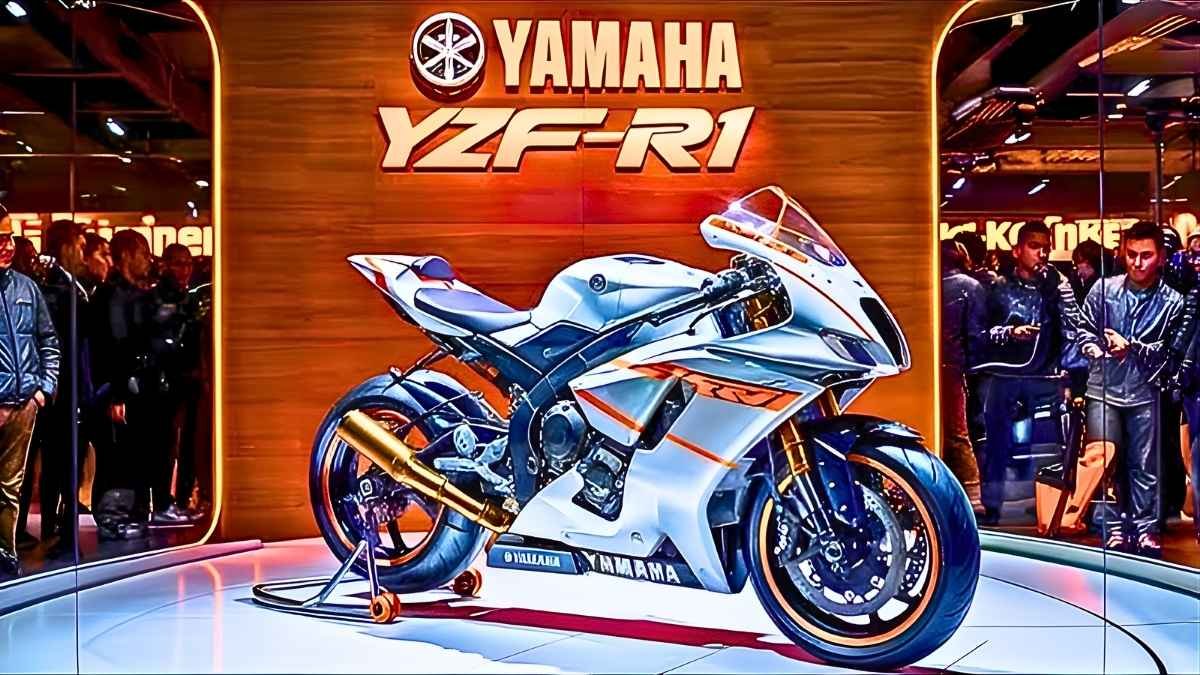
Yamaha has never treated the R1 as just another motorcycle. For decades, it has been the brand’s performance statement — a machine that carries racing DNA straight from the circuit to the street. With the 2025 Yamaha YZF-R1, that legacy doesn’t just continue, it evolves.
At a time when superbikes are balancing stricter emissions, advanced electronics, and rising rider expectations, Yamaha has refined the R1 with a clear goal: make it faster, more stable, and more precise without losing its raw edge. The 2025 version feels less like a cosmetic refresh and more like a carefully engineered upgrade aimed at serious riders.
Design Evolution: Aggression With Purpose
The 2025 YZF-R1 stays true to its aggressive identity, but every line now serves a clearer aerodynamic function. The front fairing has been reshaped to reduce drag while increasing downforce at high speeds. Integrated winglets, inspired by Yamaha’s racing program, help keep the front wheel planted during hard acceleration.
The LED headlight setup has been refined to create a sharper, more focused front profile. It gives the bike a modern look while improving visibility in real-world riding conditions. From the sculpted fuel tank to the compact tail section, the design feels tight and intentional.
Airflow management has been improved through redesigned intake ducts that guide air more efficiently to the engine. This not only enhances performance but also contributes to high-speed stability. Even while stationary, the R1 communicates one thing clearly — it is built for speed.
Engine and Performance Refinements
At the heart of the 2025 R1 remains Yamaha’s iconic 998cc inline four-cylinder engine with crossplane crankshaft technology. This engine layout continues to be the defining characteristic of the R1, delivering linear torque and a distinctive power feel that separates it from traditional superbikes.
For 2025, Yamaha has refined internal components and updated engine mapping for sharper throttle response. Acceleration feels immediate, yet controlled. The mid-range has been strengthened, offering stronger drive out of corners — a noticeable improvement for track-focused riders.
The exhaust system has also been tuned to enhance both efficiency and sound character. The deeper exhaust note complements the bike’s aggressive personality without becoming overwhelming.
Paired with a six-speed gearbox and an advanced quick-shifter, gear transitions remain smooth even under hard acceleration. The combination of lightweight construction and optimized frame geometry ensures the R1 remains agile during quick directional changes.
Advanced Electronics and Rider Control
Modern superbikes are defined as much by electronics as by engine output, and the 2025 YZF-R1 reflects that reality. Yamaha’s six-axis Inertial Measurement Unit monitors lean angle, acceleration, and braking inputs in real time.
The system governs traction control, slide control, lift control, launch control, and cornering ABS. What stands out in this iteration is how naturally these systems intervene. Rather than feeling intrusive, they operate in the background, allowing skilled riders to maintain control while pushing limits.
Customizable riding modes give flexibility based on road or track conditions. Riders can fine-tune throttle sensitivity, traction levels, and braking characteristics according to preference.
The full-color TFT display acts as the command center. It provides clear data on speed, gear position, lean angle, and performance metrics. Connectivity features allow integration with mobile devices for ride tracking and performance monitoring, bringing a layer of modern convenience to a race-focused machine.
Suspension, Handling, and Stability
Handling has always been central to the R1’s identity. The 2025 model builds on that reputation with refined suspension tuning and improved aerodynamic balance.
Fully adjustable front forks and a rear shock absorber allow riders to dial in settings for different riding styles. Whether on a racetrack or a winding mountain road, the R1 remains composed under heavy braking and aggressive cornering.
The aluminum Deltabox frame continues to provide a balance between rigidity and feedback. Combined with aerodynamic enhancements, the bike feels more stable at high speeds while maintaining quick steering response.
This blend of stability and agility is what gives the R1 its confident character. It encourages riders to push harder while maintaining a sense of control.
Rider Comfort and Ergonomic Updates
Although performance remains the priority, Yamaha has introduced subtle ergonomic refinements. The seat profile has been adjusted for improved support, especially during longer rides.
Handlebar positioning and footpeg placement maintain an aggressive riding stance while reducing unnecessary strain. Improved wind protection from the updated fairing design helps reduce fatigue during sustained high-speed runs.
These changes may seem minor individually, but together they make the R1 more manageable for extended use without compromising its track-ready focus.
Market Position and Competitive Landscape
The 2025 Yamaha YZF-R1 continues to compete directly with the BMW S1000RR, Ducati Panigale V4, Kawasaki Ninja ZX-10R, and Honda CBR1000RR-R Fireblade.
While some competitors focus heavily on peak horsepower figures, Yamaha emphasizes balance and rideability. The crossplane engine’s torque delivery provides a unique feel that many riders prefer for corner exits and real-world performance.
As a flagship model, the R1 plays a critical role in Yamaha’s brand image. It reinforces the company’s racing heritage and engineering capability in a segment where prestige matters as much as performance.
A Superbike Built for Precision
The 2025 Yamaha YZF-R1 is not about dramatic reinvention. Instead, it sharpens an already proven formula. Aerodynamics are more effective, electronics are more refined, and engine response is more precise.
For experienced riders seeking a machine that blends raw speed with intelligent control, the new R1 delivers a focused and confident experience. It stays true to its racing roots while adapting to modern performance demands.
In an era where superbikes must balance regulation, technology, and thrill, the 2025 YZF-R1 stands as a reminder that precision engineering still defines true performance.